Practical OTV
Posted on October 30, 2018
(Last modified on January 5, 2024)
| kim
Practical OTV
————-
This post is all about OTV (Overlay Transport Virtualization) on the CSR1000v.
I wanted to create the post because there are alot of acronyms and terminology involved.
A secondary objective was to have a “real” multicast network in the middle, as the examples I have seen around the web, have used a direct P2P network for the DCI.
[Read More]
CCDE – A different Journey
Posted on February 26, 2017
(Last modified on January 5, 2024)
| kim
Wednesday the 22nd of February, in a testing center in the middle of London, my journey towards achieving the CCDE certification, finally ended in me passing this beast of an exam.
This learning journey was a very different one than either of my CCIE’s. Whereas going for the CCIE meant spending countless hours at the command-line, the CCDE meant spending all of those hours reading and discussing use cases for technologies. It also meant stepping my toes into the business side, picking up the “Why?” behind selecting a specific technology.
[Read More]
Snippet: The story of the EFP
Posted on November 14, 2016
(Last modified on January 5, 2024)
| kim
New practice lab(s) available…
Posted on October 31, 2016
(Last modified on January 5, 2024)
| kim
In case you are serious about going for the CCDE certification, I highly recommend you check out my friend Martin Duggan’s new lab(s) on Leanpub. His writing style is very good and its easy to follow along and i look forward to hitting this lab myself.
[Read More]
Practical DMVPN Example
Posted on October 13, 2016
(Last modified on January 5, 2024)
| kim
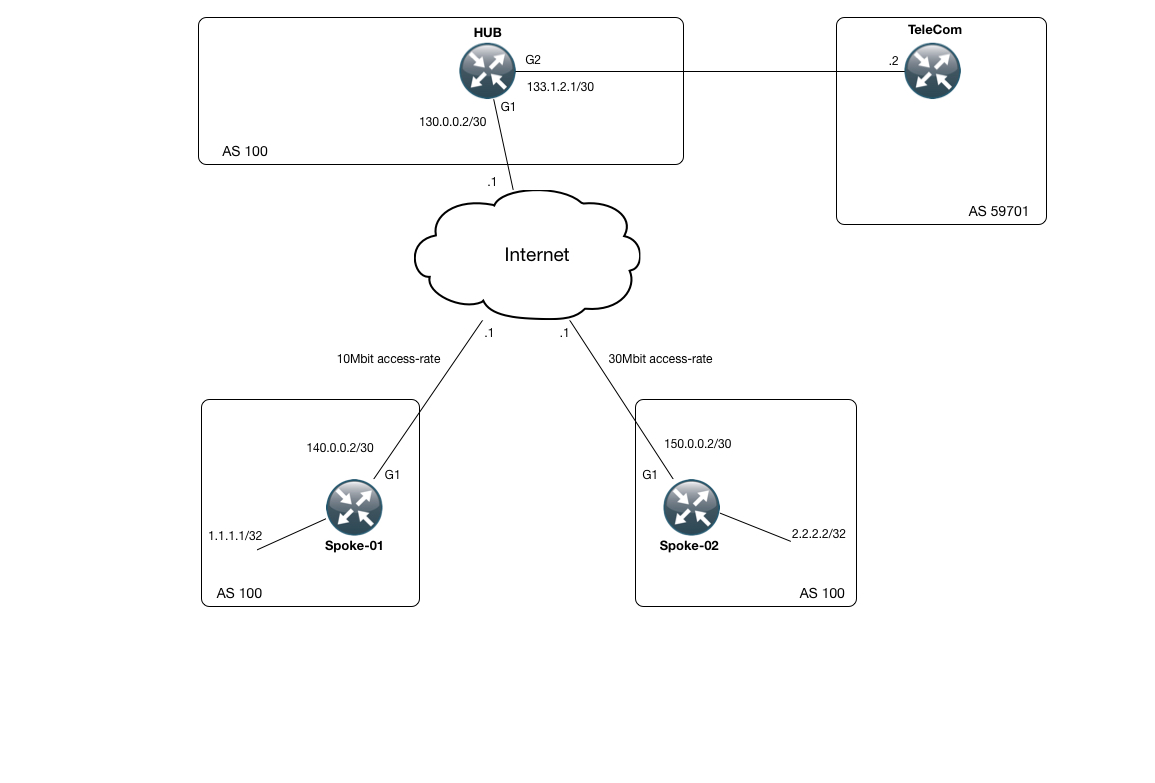
First off, lets take a look at the topology I will be using for this example:
Everything works, and we the math is right, we should see an NHRP shortcut being created for the Spoke to Spoke tunnel:
[Read More]
GETVPN Example
Posted on May 15, 2016
(Last modified on January 5, 2024)
| kim
A couple of weeks ago I had the good fortune of attending Jeremy Filliben’s CCDE Bootcamp.
It was a great experience, which I will elaborate on in another post. But one of the technology areas I had a bit of difficult with, was GETVPN.
[Read More]
Passed the CCDE written. Now what?
Posted on January 6, 2016
(Last modified on January 5, 2024)
| kim
I was fortunate enough to finally pass the CCDE written exam yesterday morning.
That begs the question of “Now What?”
Well, I will spend a couple of days putting together a study strategy, based on where I am now compared to where I need to be in order to pass the exam. As it looks now, I am probably going for a fall 2016 exam date. That gives me enough time to settle into a new job with everything that entails.
[Read More]
MPLS VPN's over mGRE
Posted on May 17, 2015
(Last modified on January 5, 2024)
| kim
This blog post outlines what “MPLS VPNs over mGRE” is all about as well as provide an example of such a configuration.
So what is “MPLS VPNs over mGRE”? – Well, basically its taking regular MPLS VPN’s and using it over an IP only core network. Since VPN’s over MPLS is one of the primary drivers for implementing an MPLS network in the first place, using the same functionality over an IP-only core might be very compelling for some not willing/able to run MPLS label switching in the core.
[Read More]
Overwhelmed – CCDE
Posted on May 7, 2015
(Last modified on January 5, 2024)
| kim
I am preparing for the CCDE written exam, which I have coming up at CLUS.
There are so much material to go through, both to read as well as watch CL presentations, it can be a bit overwhelming at times.
[Read More]
Cisco Live US 2015 – Session Schedule
Posted on April 7, 2015
(Last modified on January 5, 2024)
| kim
This is my current schedule for the Cisco Live US 2015 event.
Most are related to my CCDE studies and a few are with technologies and products that im interested in in general.
Monday:
08:00 – 09:30 BRKSAN-2101 FCoE for small and mid size enterprises.
[Read More]
Upcoming webinar with Daniel Dib
Posted on February 12, 2015
(Last modified on January 5, 2024)
| kim
Just wanted to let you know that Daniel from lostintransit.se is doing a webinar on network design. I will be attending and helping out any way i can.
Go here to learn more: https://learningnetwork.cisco.com/blogs/community_cafe/2015/01/21/network-design-fundamentals-webinar-with-ciscovip-daniel-dib
Unified/Seamless MPLS
Posted on February 8, 2015
(Last modified on January 5, 2024)
| kim
In this post I would like to highlight a relative new (to me) application of MPLS called Unified MPLS.
The goal of Unified MPLS is to separate your network into individual segments of IGP’s in order to keep your core network as simple as possible while still maintaining an end-to-end LSP for regular MPLS applications such as L3 VPN’s.
[Read More]
Using LISP for IPv6 tunnelling.
Posted on August 10, 2014
(Last modified on January 5, 2024)
| kim
In this post I would like to show how its possible to use a fairly new protocol, LISP, to interconnect IPv6 islands over an IPv4 backbone/core network.
LISP stands for Locator ID Seperation Protocol. As the name suggest, its actually meant to decouple location from identity. This means it can be used for such cool things as mobility, being VM’s or a mobile data connection.
[Read More]
EIGRP Query bounding.
Posted on July 13, 2014
(Last modified on January 5, 2024)
| kim
In the process of restudying EIGRP as a protocol, and more specifically as to how it converges, you can’t avoid running into the saying “Remember to bound your queries!”.
From a conceptual point of view its fairly easy to understand that the further out you ask for a prefix the longer the convergence process will take. But what really takes place when you have different tools in place to bound the query from taking place?
[Read More]
Change of focus
Posted on June 17, 2014
(Last modified on January 5, 2024)
| kim
I have decided to change my focus quite a bit.
I was planning on tackling the IOS-XR exam this year and was preparing for it by going through the blueprint. However another track kept pulling me towards it, and ofcourse thats the CCDE track.
[Read More]